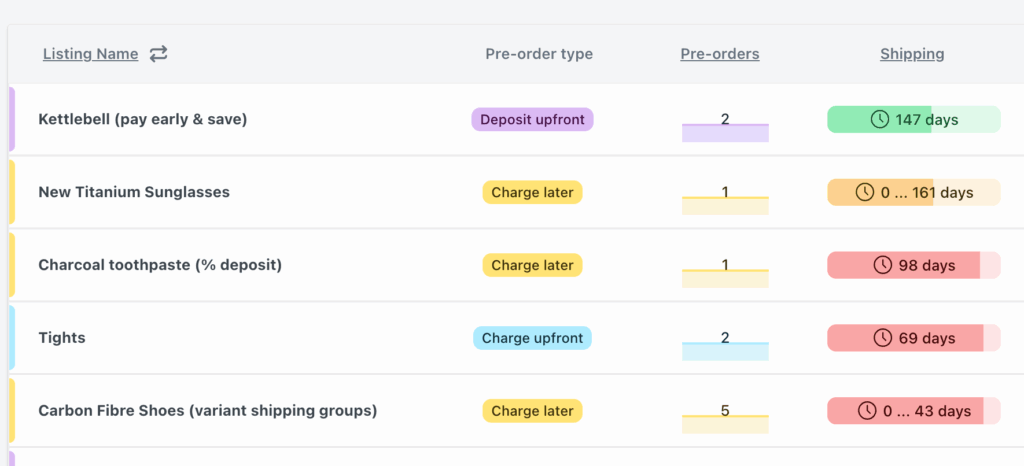
5 Ways to Put Products on Pre-Order in Shopify: Fine-Grained Control to Mass Automation

Introduction

Putting products on pre-order in Shopify is a great way to build hype, improve cash flow, and validate demand before you commit to inventory. But many merchants run into the same question: what’s the best way to incorporate pre-orders into my business?

That’s where PreProduct comes in. PreProduct gives you multiple ways to put products on pre-order in Shopify — from quick manual listings to fully automated workflows. Each approach has its own strengths and trade-offs, depending on how many products you’re managing and how hands-on you want to be.

In this post, we’ll walk through five different ways of putting a product on pre-order in Shopify with PreProduct.


1. Manual Listing

The most straightforward way of putting a product on pre-order is to create a listing manually in PreProduct. You can set deposits, lead times, and customize variant availability. It’s perfect if you want complete control over the details of each pre-order.

The trade-off? It’s slower when managing more than a handful of products.

👉 Full guide: Listing a new product on pre-order


2. Bulk Lister

If you want to put multiple products on pre-order at once, PreProduct’s bulk product lister makes it simple. You can apply pre-order settings across batches of products in just a few clicks.

This is ideal for mid-sized catalogs where setting each product individually would be too time-consuming.

👉 Full guide: Bulk Product Lister


3. Listing Manager

For stores managing hundreds or even thousands of products, templates are the best way to scale pre-orders. Instead of configuring each product, you define rules — for example: “apply deposit upfront pre-orders to all products tagged ‘Pre-Sale’.”

PreProduct’s Listing Manager builds on templates to deliver full automation. Once your templates are in place, the Listing Manager will automatically apply them to new or updated products as variants go in and out of stock.

This is ideal for large catalogs where products frequently go in and out of stock, saving hours of repetitive admin work.

👉 Learn more: Templates


4. API

If you need complete flexibility, PreProduct’s Admin API is the most powerful way to put products on pre-order. It allows developers to programmatically create, edit, or remove listings, integrate with your backend, and sync pre-order data with external systems like ERPs or custom apps.

This route is for teams with technical resources who want pre-orders deeply embedded in their existing workflows.

👉 Full guide: PreProduct Admin API


5. Shopify Flow

Shopify Flow is a free Shopify app that allows you to build automation workflows across your store. PreProduct integrates directly with Flow, enabling over 30 pre-order related triggers and actions:

  • “Put listing variant on pre-order”
  • “Link listing to template”

This opens up powerful automation without needing to write code, though it does require a system-thinking approach to set up correctly.

👉 Full guide: Pre-order Shopify Flow Actions & Triggers


Which Method Should You Choose?

When it comes to putting products on pre-order in Shopify with PreProduct, the right method depends on your stage and scale:

  • Best for getting started: Manual listing
  • Best for 10–100 products on pre-order: Bulk lister or listing manager
  • Best for automation: Start with Listing Manager, then add Shopify Flow if needed

Wrap-Up

Putting products on pre-order is a low-risk way to improve cash flow and capture demand before stock arrives. Whether you’re just listing a single product manually or building full-scale automations, PreProduct supports every workflow — from fine-grained control to mass automation.

Want to learn more? Check out the PreProduct docs for step-by-step guides on putting products on pre-order in Shopify.

Pre-sell With PreProduct

7 day free trial with all plans

Shopify Flow Pre-order Automation: Complete Guide + 31 Triggers & Actions

Managing pre-orders manually drains time small teams don’t have. Tracking inventory thresholds, sending customer emails, coordinating fulfillment, updating product availability, these repetitive tasks consume hours each week. Shopify Flow pre-order automation eliminates this operational overhead, letting merchants build sophisticated pre-order systems without developers or ongoing maintenance costs.

Whether you’re running simple restock campaigns or complex charge-later pre-orders with deposits, automation transforms manual processes into hands-free workflows that scale with your business. This guide shows you how to automate pre-orders using native Shopify Flow, then extend functionality with PreProduct’s 15 custom actions and 16 custom triggers for complete pre-order lifecycle management.

Why Use Shopify Flow for Pre-orders?

Pre-order operations involve multiple interconnected processes: inventory monitoring, product availability updates, customer communications, pricing adjustments, and fulfillment coordination. Without automation, merchants manually check inventory levels, toggle product settings, send emails, and track when to charge customers or release orders.

Shopify Flow automates these touchpoints, creating intelligent workflows that:

  • Save operational time. Instead of manually enabling pre-orders when items sell out, Flow does it automatically within seconds of inventory hitting zero.
  • Reduce human error. Automated workflows execute consistently every time, eliminating forgotten steps or missed communications.
  • Scale without headcount. Small teams can manage hundreds of pre-orders with the same efficiency as large operations departments.
  • Enable sophisticated logic. Combine multiple conditions to create nuanced workflows that adapt to different scenarios (product type, customer segment, inventory status).

For merchants running pre-orders, Flow transforms a labor-intensive process into a hands-free operation that runs 24/7 without intervention.

Shopify Flow Pre-order Automation: Key Benefits

Before diving into specific workflows, understanding the strategic advantages helps you design automation that aligns with your operational goals.

  • Instant pre-order activation. When high-demand products sell out, Flow can activate pre-order mode within seconds, capturing demand instead of losing sales to “out of stock” messages.
  • Automatic inventory management. Flow monitors inventory levels continuously and toggles between buy-now and pre-order modes based on stock availability, eliminating manual threshold monitoring.
  • Coordinated customer communication. Trigger email sequences, update customer segments, or send notifications based on pre-order events, keeping buyers informed throughout the pre-order journey.
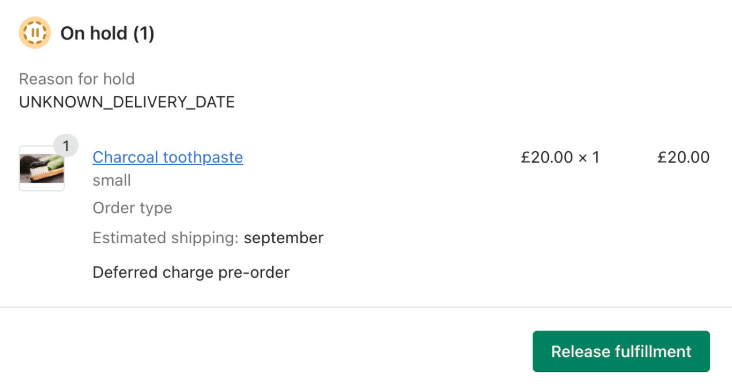
  • Flexible fulfillment control. Automatically apply fulfillment holds to charge-later pre-orders, then release orders when stock arrives or you manually tag items as ready-to-ship.
  • Conditional logic for complex scenarios. Build workflows that behave differently based on product tags, metafields, inventory levels, or customer attributes, handling exceptions without manual intervention.

These capabilities compound when combined, creating end-to-end automation that manages pre-orders from stockout detection through final fulfillment release.

What Flow offers small teams:

  • Automation across products, inventory, orders, customers, and more.
  • No need for manual scripts or recurring app maintenance.
  • The ability to scale smarter, not just headcount.
  • Qualified stores can use the HTTP request action to call out to third party services like ERP’s, marketing services or AI context aggregators.

In essence, Flow gives you the building blocks to operate like a much larger team – without hiring.

automation

Part 1: Native Shopify Flow Pre-order Automation (Free)

You can build functional pre-order automation using only Shopify Flow’s native capabilities, no apps required. This approach works well for basic scenarios and helps you understand Flow’s fundamentals before adding advanced features.

Example Workflow: Activate Pre-order When Inventory Reaches Zero

This workflow automatically enables pre-orders when variants sell out, then reverses the process when stock is replenished.

➡️ Trigger: Product variant inventory equals 0

Flow monitors all product variants in your store. When any variant’s available inventory hits exactly zero, this trigger fires.

➡️ Condition: Product has tag “can-pre-order”

Not every product should become available for pre-order when it sells out. This condition checks if the product has been tagged “can-pre-order” by your team, giving you manual control over which items are pre-order eligible.

You might tag seasonal items, bestsellers, or products with predictable restock timelines as “can-pre-order” while excluding one-off or discontinued items.

➡️ Action 1: Enable “Continue selling when out of stock”

Using an HTTP request action (Shopify Plus) or manual product setting update, enable the “continue selling when out of stock” option for the variant. This allows customers to add the item to their cart and checkout even though inventory is zero.

➡️ Action 2: Update product metafield with pre-order messaging

Set a metafield on the product (e.g., custom.pre_order_message) with customer-facing text like “Ships mid-March” or “Pre-order now, shipping in 4-6 weeks.” Your theme reads this metafield to display pre-order information on product pages.

Reversal Workflow: Disable Pre-order When Stock Returns

When inventory is replenished, automatically disable pre-order mode and return to normal buy-now behavior.

➡️ Trigger: Product variant inventory is greater than 0

This trigger fires when stock levels increase above zero (restock occurs).

➡️ Condition: Product has tag “can-pre-order” AND metafield custom.pre_order_message exists

Only reverse products that were previously in pre-order mode (indicated by the presence of the pre-order metafield).

➡️ Action 1: Disable “Continue selling when out of stock”

Turn off overselling so the product returns to standard inventory behavior.

➡️ Action 2: Remove pre-order metafield

Delete the custom.pre_order_message metafield to stop displaying pre-order messaging on the product page.

Limitations of Native Flow for Pre-orders

While native Shopify Flow handles basic scenarios, it has constraints for sophisticated pre-order operations:

  • No pre-order-specific triggers. Native Flow doesn’t know when a pre-order is created, charged, or fulfilled, it only sees standard Shopify events (inventory changes, order creation, product updates).
  • Limited charge control. Flow can’t trigger deferred charges for charge-later pre-orders or coordinate payment timing with inventory arrival.
  • No fulfillment hold management. Native Flow can’t automatically apply or release fulfillment holds to prevent premature shipping of charge-later pre-orders.
  • Manual pre-order listing creation. You need to manage pre-order configurations (deposit amounts, ship dates, customer limits) outside of Flow.
  • These limitations create the case for extending Flow with pre-order-specific capabilities, which is where PreProduct’s custom triggers and actions come in.

Part 2: Extending Shopify Flow with PreProduct (31 Custom Capabilities)

PreProduct adds 31 specialized triggers and actions specifically designed for pre-order automation. While native Flow handles general Shopify events, PreProduct’s extensions give you granular control over the entire pre-order lifecycle, from listing creation through charge initiation and fulfillment release.

Why PreProduct Extends Flow

Native Shopify Flow provides infrastructure but lacks pre-order domain knowledge. PreProduct bridges this gap by introducing events and actions that understand charge-later pre-orders, deposits, customer limits, shipping notifications, and fulfillment holds.

For example, native Flow can detect when inventory hits zero, but it can’t create a pre-order listing with specific deposit amounts, ship dates, and customer limits. PreProduct’s “Create listing” action handles this complexity in a single step.

Similarly, native Flow can trigger when an order is created, but it can’t distinguish between regular orders and charge-later pre-orders, or trigger charges when inventory arrives. PreProduct’s “Charge created” trigger and “Trigger charges and/or fulfilment” action provide this pre-order-specific logic.

15 Custom Actions

PreProduct’s actions let you programmatically manage pre-order operations from within Flow workflows:

Listing Management

  • Create listing: Programmatically create pre-order listings with all configuration (deposit, ship date, limits, discounts)
  • Get listing: Retrieve listing details to use in conditional logic
  • Get all listings: Access multiple listings for bulk operations

Variant Control

  • Add variants to pre-order: Enable pre-orders for specific variants within a listing
  • Remove variants from pre-order: Disable pre-orders for variants (e.g., when discontinuing)

Configuration Updates

  • Update customer limit: Adjust maximum quantity per customer during campaigns
  • Update deposit amount: Modify deposit pricing dynamically
  • Update discount: Change pre-order discounts based on conditions
  • Update shipping: Adjust estimated ship dates as timelines shift

Charge & Fulfillment

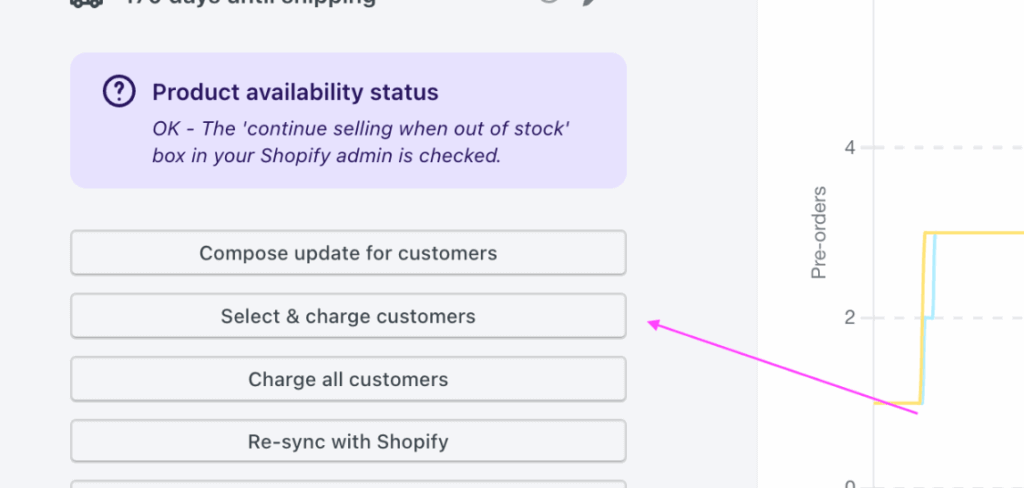
  • Trigger charges and/or fulfilment: Initiate simultaneous payment capture and fulfillment release for ready-to-ship pre-orders
  • Apply listing template: Use saved templates for consistent pre-order configuration

Status Checks

  • Check if variant is on pre-order: Conditional logic to determine variant status
  • Synchronise listing: Ensure PreProduct and Shopify stay in sync

16 Custom Triggers

PreProduct’s triggers detect pre-order-specific events that native Flow doesn’t recognize:

Listing Lifecycle

  • Listing created: Fires when a new pre-order listing is created
  • Listing finished: Triggers when a listing ends (time-based or manual)
  • Listing shipping in 5 days: Notification trigger for upcoming ship dates

Capacity & Limits

  • Listing at 90% capacity: Alert when approaching customer or quantity limits
  • Listing limit reached: Triggers when pre-order cap is hit

Pre-order Events

  • Pre-order created: Fires when a customer places a pre-order
  • Pre-order cancelled: Triggers on customer-initiated or admin cancellations

Payment Events

  • Charge succeeded: Fires after successful deferred charge capture
  • Charge failed: Triggers when payment attempts fail (for dunning workflows)

Fulfillment

  • Fulfillment released: Fires when orders are released for shipping

Communication Events

  • Confirmation email sent: Triggers after order confirmation
  • Update email sent: Fires when you send campaign updates
  • Charge notification sent: Triggers before deferred charges attempt
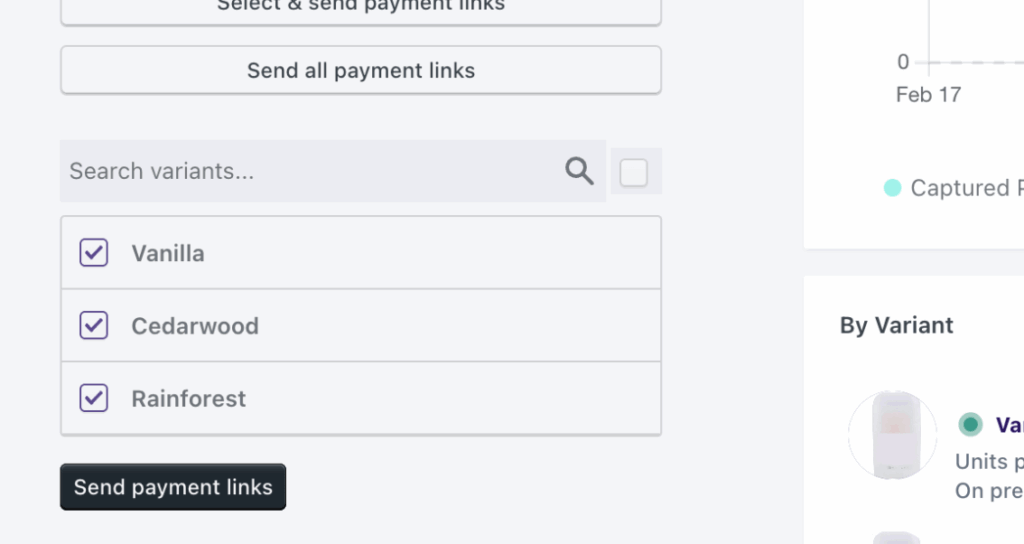
  • Payment link sent: Fires when capture-only payment links are emailed

These triggers enable workflows like:

  • Send Klaviyo events when charges fail (for email recovery campaigns)
  • Tag products when listings reach 90% capacity (for marketing urgency)
  • Update internal spreadsheets when listings finish (for reporting)
  • Notify 3PL systems when fulfillment is released (for warehouse coordination)
Shopify Flow actions
PreProduct Shopify Flow actions

Combining Triggers and Actions

The power emerges when you chain PreProduct triggers and actions together in sophisticated workflows.

Example: Auto-create pre-order listing when inventory depletes, then monitor capacity

  1. Native trigger: Product variant inventory = 0
  2. Native condition: Product has tag “auto-pre-order”
  3. PreProduct action: Create listing (using template with deposit, ship date, limit)
  4. PreProduct trigger: Listing at 90% capacity
  5. Native action: Tag product “high-demand-pre-order”
  6. Native action: Add product to “Trending” collection (for homepage visibility)

This workflow automatically launches pre-order campaigns, then alerts you when demand is high so you can increase production quantities.

Real Workflow Examples: Shopify Flow Templates

Let’s walk through detailed implementations of common pre-order automation scenarios.

Workflow 1: Automatic Pre-order Activation on Stockout

Business Scenario: You sell seasonal products that frequently sell out between restocks. Instead of losing sales, you want to automatically offer pre-orders and notify customers of the estimated ship date.

➡️ Trigger: Variant inventory quantity = 0

➡️ Conditions:

  1. Product has tag “auto-pre-order-enabled”
  2. Product does NOT have metafield preproduct.listing_id (prevents duplicate listings)

➡️ Actions:

  1. Check if variant is on pre-order (PreProduct action)
  • If already on pre-order, end workflow (prevent duplicates)
  1. Create listing (PreProduct action)
  • Use template: “Standard restock pre-order”
  • Deposit: 0% (charge-later)
  • Ship date: +30 days from today
  • Customer limit: 5 units
  1. Add product to collection (Native action)
  • Collection: “Pre-order Items”
  • Makes pre-orders discoverable on your site
  1. Send Klaviyo event (Integration action)
  • Event: “Product on pre-order”
  • Triggers email campaign to waitlist subscribers

Result: When bestsellers sell out, they automatically become available for pre-order with a 30-day estimated ship date. Customers on your waitlist receive notification emails, and the product appears in your “Pre-order Items” collection.

pre-order workflow template

Workflow 2: Charge & Fulfill When Inventory Arrives

Business Scenario: You’re running charge-later pre-orders. When inventory arrives, you want to automatically trigger charges for all waiting pre-orders and release orders for fulfillment simultaneously.

➡️ Trigger: Product tagged “inventory-arrived”

Your team applies this tag when stock hits the warehouse, initiating the charge and fulfillment process.

➡️ Conditions:

  1. Product has metafield preproduct.listing_id (confirms active listing exists)

➡️ Actions:

  1. Get listing (PreProduct action)
  • Retrieve listing details using preproduct.listing_id
  1. Trigger charges and/or fulfilment (PreProduct action)
  • Target: All pre-orders for this listing
  • Action: Charge + release fulfillment
  • This action attempts to charge all vaulted cards and simultaneously releases fulfillment holds
  1. Send internal Slack notification (HTTP request action, Shopify Plus)
  • Message: “Charges initiated for [Product Name] pre-orders. Monitor charge success rate.”
  1. Remove tag (Native action)
  • Remove “inventory-arrived” tag (prevents workflow re-triggering)

Result: A single tag application bulk-processes all pre-orders for a product, charging customers and releasing orders for shipment. Your team receives Slack confirmation and can monitor charge success rates.

robot arm

Workflow 3: VIP Customer Priority Fulfillment

Business Scenario: You want to manually prioritize certain pre-orders for early fulfillment (VIP customers, influencers, early bird orders).

➡️ Trigger: Order tagged “priority-fulfillment”

Your team manually applies this tag to orders that should be fulfilled first.

➡️ Conditions:

  1. Order has tag “priority-fulfillment”
  2. Order line items include products with metafield preproduct.listing_id

➡️ Actions:

  1. Trigger charges and/or fulfilment (PreProduct action)
  • Target: This specific order only
  • Action: Charge + release fulfillment
  1. Add customer tag (Native action)
  • Tag: “VIP-early-access”
  • Flags customer for future priority treatment
  1. Send customer email (Native action)
  • Template: “Your pre-order is shipping early!”
  • Builds loyalty and excitement

Result: You maintain granular control over who gets pre-orders first, while still using automation to handle the charge and fulfillment mechanics.

Workflow 4: Metafield-Based Conditional Pre-orders

Business Scenario: You want fine-grained control over which products become pre-orders, using metafields to define eligibility rules (minimum price, specific vendors, certain product types).

➡️ Trigger: Variant inventory quantity = 0

➡️ Conditions (All must be true):

  1. Product metafield custom.pre_order_eligible = “true”
  2. Product price > $50
  3. Product vendor = “House Brand”

➡️ Actions:

  1. Create listing (PreProduct action)
  • Template varies by product type:
  • If product type = “Apparel”: Use “Apparel pre-order template” (30% deposit)
  • If product type = “Electronics”: Use “Electronics template” (50% deposit)
  • Ship date pulled from metafield custom.expected_restock_date
  1. Update metafield (Native action)
  • Set custom.pre_order_active = “true”
  • Your theme uses this to display “Pre-order” badges

Result: Only high-value, house-brand products automatically become pre-orders, with deposit amounts tailored to product category and ship dates sourced from your internal restock planning metafields.

Advanced Shopify Flow Automation Strategies

Once you’re comfortable with basic workflows, these advanced strategies unlock additional operational leverage.

🤖 Multi-Condition Logic for Targeted Automation

Combine multiple conditions to create nuanced automation that handles different scenarios appropriately.

Example: Deposit amount varies by product price tier

  • Products $0-$100: 0% deposit (pure charge-later)
  • Products $101-$300: 25% deposit
  • Products $301+: 50% deposit

Build conditional branches in Flow:

  1. If product price ≤ $100 then create listing with 0% deposit template
  2. Else if product price ≤ $300 then create listing with 25% deposit template
  3. Else create listing with 50% deposit template

This tailors payment structure to product value without manual intervention.

📫 Marketing Integration via Klaviyo & Shopify Flow

Trigger sophisticated email campaigns based on pre-order events, keeping customers engaged throughout extended lead times.

Example: Automated pre-order nurture sequence

  1. Trigger: Pre-order created (PreProduct trigger)
  2. Action: Send Klaviyo event “pre_order_placed”
    • Klaviyo flow triggered with 3-email sequence:
    • Day 0: Order confirmation + what to expect
    • Day 14: Production update + behind-the-scenes content
    • Charge date – 3 days: “Charge coming soon, update payment method if needed”
  3. Trigger: Listing shipping in 5 days (PreProduct trigger)
  4. Action: Send Klaviyo event “pre_order_shipping_soon”
    • Klaviyo flow: Excitement-building email with tracking info preview
  5. Trigger: Charge failed (PreProduct trigger)
  6. Action: Send Klaviyo event “charge_failed”
    • Klaviyo flow: Dunning sequence with payment update link

This creates a hands-free communication strategy that maintains customer excitement and recovers failed payments automatically.

📦 Operations Integration: ERP & 3PL Coordination

For merchants with external systems, Flow can orchestrate data between Shopify and your operations stack.

Example: ERP notification when pre-order capacity reached

  1. Trigger: Listing hit max limits (PreProduct trigger)
  2. Action: HTTP request to ERP (Shopify Plus)
    • Endpoint: https://your-erp.com/api/production-alert
    • Payload: { "product_id": "...", "pre_orders": 450, "message": "Increase production run" }
    • Your ERP alerts procurement to order more materials

Example: 3PL hold release coordination

  1. Trigger: Fulfillment released (PreProduct trigger)
  2. Action: HTTP request to 3PL
    • Endpoint: https://your-3pl.com/api/release-hold
    • Payload: { "order_ids": [...], "ship_date": "..." }
    • Your 3PL receives notification to start picking/packing

These integrations prevent pre-order information silos, keeping all systems synchronized.

⏰ Scheduled Workflows for Recurring Tasks

While most workflows are event-triggered, some pre-order operations benefit from time-based automation.

Example: Weekly pre-order capacity report

  • Trigger: Every Monday at 9am
  • Action: HTTP request to Google Sheets API
    • Appends row: [Date, Total active pre-orders, Revenue committed, Capacity used]
  • Result: Automatic weekly reporting without manual data pulls

Example: Abandoned cart recovery for pre-orders

  • Trigger: Cart abandoned (with pre-order item)
  • Wait: 2 hours
  • Condition: Cart not converted
  • Action: Send email highlighting pre-order benefits
    • “Reserve your spot, only X units left”
    • “Lock in early access pricing”
shopify flow logo

Troubleshooting Shopify Flow Pre-order Automation

Even well-designed workflows occasionally need debugging. Here’s how to troubleshoot common issues.

Flow Not Triggering as Expected

Symptom: Workflow should fire but doesn’t appear in Flow activity logs.

Common Causes:

  • Trigger condition not met: Double-check that the exact conditions exist (e.g., inventory hit exactly 0, not 1)
  • Workflow disabled: Verify workflow status is “Active” not “Paused”
  • Condition logic error: Review “AND” vs “OR” logic in complex conditions
  • Tag spelling mismatch: Flow is case-sensitive; “pre-order” ≠ “Pre-Order”

Debugging:

  1. Check Flow activity logs (Apps → Flow → [Workflow name] → Activity)
  2. Look for “Skipped” entries with reason explanations
  3. Temporarily remove conditions to isolate which filter is blocking
  4. Create test product meeting all conditions to verify trigger works

Charge Failures After Triggering

Symptom: Flow triggers “Trigger charges and/or fulfilment” action but charges fail.

Common Causes:

  • Expired vaulted cards (lead time exceeded card expiration)
  • Insufficient funds in customer accounts
  • Payment method removed by customer

Resolution:
PreProduct can send ‘failed charge’ emails that can be used as a dunning process, but you can enhance this with Flow:

  1. Trigger: Charge failed (PreProduct trigger)
  2. Wait: 24 hours
  3. Action: Send customer email
    • Subject: “Update payment method for your pre-order”
    • Include link to customer portal for card updates
  4. Wait: 48 hours
  5. Action: Send internal Slack notification
    • Alert team to manually follow up with high-value orders

Testing Workflows Without Affecting Customers

Challenge: You want to test workflows before enabling them for real traffic.

Best Practices:

  • Use test products: Create duplicate products tagged “test-product” and build test-specific conditions:
    • Condition: Product title contains “TEST”
    • This prevents test workflows from affecting live products
  • Disable email actions temporarily: While testing, comment out or disable email/SMS actions so customers don’t receive test notifications.
  • Run manually: Flow lets you manually trigger workflows. Create test data (test product, test inventory level), then click “Run workflow” to see results without waiting for real events.
  • Check activity logs: After manual runs, review step-by-step execution in activity logs to verify each action completed successfully.

Performance Optimization for Complex Workflows

Symptom: Workflows run slowly or time out with many actions.

Solutions:

  • Split complex workflows: Instead of one 20-action workflow, create multiple smaller workflows chained via triggers:
    • Workflow 1: Detect stockout → Create listing → Trigger “listing_created” event
    • Workflow 2: Trigger on “listing_created” → Send emails, update collections
  • Avoid unnecessary HTTP requests: HTTP actions are slower than native actions. Only use them when necessary for external integrations.
  • Use conditional early exits: Place most restrictive conditions first to exit workflows quickly when conditions aren’t met.

FAQ: Shopify Flow Pre-order Automation

No, Shopify Flow is available on all plans (Basic, Grow, Advanced, and Plus). However, HTTP request actions, which enable integration with external services like ERPs, 3PLs, or custom APIs, are Shopify Plus exclusive.

For basic pre-order automation (creating listings, triggering charges, updating products), standard Flow actions work on any plan. HTTP requests are only needed for advanced integrations beyond Shopify’s ecosystem.

Do I need Shopify Plus to use Flow for pre-orders?

Yes, when combined with PreProduct’s Flow actions. Native Flow can’t trigger deferred charges because it doesn’t have pre-order-specific payment actions. PreProduct’s “Trigger charges and/or fulfilment” action enables automatic charge initiation based on inventory arrival, manual tags, or scheduled timing.
For example, you can build a workflow:

Result: Automatic bulk charging when stock lands
– Trigger: Product tagged “inventory-arrived”
– Action: Trigger charges for all waiting charge-later pre-orders

Can Shopify Flow automate charge-later pre-orders?

Create a test workflow using duplicate products and restrictive conditions:

  1. Duplicate a real product and prefix the title with “TEST -“
  2. Build your workflow with an additional condition: “Product title contains ‘TEST'”
  3. Manually adjust the test product’s inventory or tags to trigger the workflow
  4. Review Flow activity logs to verify each step executes correctly
  5. Once validated, remove the “TEST” condition to enable for real products

Disable customer-facing actions (emails, SMS) during testing to prevent notifications.

How do I test Flow workflows without affecting real orders?

Native Shopify Flow provides general ecommerce automation: inventory changes, order creation, product updates, customer actions. It understands Shopify events but not pre-order concepts like charge-later, deposits, fulfillment holds, or listing lifecycle.

PreProduct extends Flow with 31 pre-order-specific capabilities:

  • 15 actions: Create listings, trigger charges, update deposits, release fulfillment
  • 16 triggers: Listing created, charge failed, capacity reached, shipping notifications

Use native Flow for basic stockout detection and product updates. Use PreProduct extensions for sophisticated pre-order operations like automated charge timing, customer limit management, and fulfillment coordination.

What’s the difference between native Shopify Flow and PreProduct’s extensions?

Here are some solutions to common issues:

  • Workflow status: Verify it’s “Active” not “Paused”
  • Trigger conditions: Ensure the event you expect actually occurred (check exact inventory level, tag spelling, metafield values)
  • Condition logic: Review “AND” vs “OR” logic, all “AND” conditions must be true
  • Activity logs: Flow logs all execution attempts. Navigate to the workflow and click “Activity” to see if it fired but was “Skipped” with a reason
  • Timing: Some triggers have slight delays (inventory updates may take 30-60 seconds to propagate)

If still stuck, temporarily remove all conditions except the trigger to isolate which filter is blocking execution.

How do I troubleshoot workflows that don’t trigger?

Shopify Flow works with any app that provides custom triggers and actions. Some pre-order apps offer basic Flow integration (e.g., “Pre-order placed” trigger), but the depth varies significantly.

PreProduct provides the most comprehensive pre-order integration with 31 total capabilities. Most other apps offer 2-5 basic triggers/actions without support for charge-later workflows, fulfillment holds, or deposit management.

If you’re using a different pre-order app, check their documentation for available Flow triggers and actions, then build workflows using those events combined with native Shopify actions.

Does Shopify Flow work with other pre-order apps besides PreProduct?

Native Flow (without pre-order apps) can’t:

– Create pre-order listings with deposits, ship dates, or customer limits
– Trigger deferred charges for charge-later pre-order
– Automatically apply or release fulfillment holds
– Distinguish between regular orders and pre-orders
– Track pre-order capacity or notify when limits are reached

These limitations are why merchants serious about pre-orders use apps like PreProduct to extend Flow with pre-order domain expertise. The combination of native Flow infrastructure + pre-order-specific triggers/actions creates powerful automation that neither tool achieves alone.

What are Shopify Flow’s limitations for pre-orders?

Conclusion

Shopify Flow pre-order automation transforms time-consuming manual processes into intelligent, hands-free workflows. Native Flow provides free foundational capabilities, perfect for basic stockout-to-pre-order scenarios using tags and metafields.

For merchants running sophisticated pre-order programs (charge-later, deposits, multi-step payment plans, fulfillment coordination), PreProduct’s 15 actions and 16 triggers unlock automation native Flow alone can’t achieve. Automatically create listings when inventory depletes, trigger charges when stock arrives, release fulfillment in bulk, and coordinate customer communications throughout extended lead times.

The result: small teams operate at enterprise scale, capturing demand automatically instead of losing sales to stockouts, and delivering exceptional customer experiences without expanding headcount.

Pre-sell With PreProduct

7 day free trial with all plans

Increase Shopify Sales with 6 Proven Pre-order Strategies

We also have a YouTube version of this article here.

Introducing pre-orders for growth on Shopify

Looking to increase Shopify sales? The secret can lie in effective pre-order strategies. This article cuts straight to the point, providing six practical tactics that translate customer interest into secured revenue— crafting urgency, exclusivity, and increasing average order value to name a few. We’ll guide you through these methods and showcase how they’re each working for real-life online stores.

Key Takeaways

  • Pre-orders can significantly boost Shopify sales by creating urgency, leveraging influencer marketing, increasing average order value, and securing revenue before inventory is available.
  • Tactical pre-order strategies including limited edition items, exclusive discounts, charge-later options, time-limited availability, sustainable practices, and offering exclusive benefits can enhance customer engagement, loyalty, and overall sales.
  • To maximize the effectiveness of pre-orders, it’s essential to employ an effective customer centric marketing strategy. That way you can engage customers with a compelling narrative, offer flexibility, align pre-order strategies with brand values, and maintain transparent communication.
  • Implementing loyalty programs can enhance customer engagement, improve retention rates, and motivate repeat purchases.
Shopify's official pre-order landing page for how to increase Shopify sales
https://www.shopify.com/pre-orders

Why and How Pre-Orders Can Increase Sales on Shopify

Stepping into the ecommerce store arena, you quickly learn that the key to a thriving Shopify store is not just attracting potential customers but converting their interest into actual sales. Pre-orders let you do this before stock hits your warehouse. Imagine the power of knowing your product is sold even before it’s physically available. It’s a strategy that transforms potential customers into committed buyers and increases customer retention in an otherwise volatile online shopping environment.

But how exactly do pre-orders amplify your Shopify store’s performance? Pre-orders can build a compelling sense of urgency by bridging the gap between anticipation and ownership. As the launch date nears, exclusive ad campaigns, early bird discounts, and time-sensitive offers can coax the prospective customers from the sidelines and into an action. Utilizing Google ads alongside other paid advertising platforms like Facebook and Instagram can further enhance these campaigns, driving targeted traffic and boosting sales. This urgency can be manufactured by employing a customer-centric playbook designed for increasing sales on Shopify.


Tried and Tested Shopify Pre-order Strategies

Now, let’s dive into each strategy in the form of mini case studies. The ecommerce market thrives on innovation, and pre-order strategies are a testament to this. These six strategies are proven tactics that can boost conversions. From limited editions that sell out rapidly to exclusive discounts that spur customers to click ‘pre-order’, each strategy is essential for boosting conversions and enhancing the performance of your ecommerce business or Shopify store. Additionally, bolting on additional marketing techniques like loyalty programs can further boost conversions and enhance customer engagement.

We’ll explore the mechanisms behind these strategies and how you can tailor them to fit your online store.

Illustration of a Shopify store with increased sales
Pre-orders on Shopify

1. Limited editions pre-orders (Fenty Beauty)

Fenty Beauty’s limited edition pre-orders capitalize on the power of scarcity. Each exclusive launch generates significant excitement among customers, leveraging the brand’s association with Rihanna and aligning product releases with major events to maximize impact. The strategy isn’t just about celebrity influence; it’s about creating a compelling narrative around unique, one-time-only products.

When Fenty Beauty releases a limited edition product, the buzz generated drives significant interest and sales. This approach involves cohesive brand messaging across all customer touchpoints, supported by digital advertising, Google ads, and search engine optimization to maintain visibility and engagement.

The allure of limited edition pre-orders lies in the exclusive, unrepeatable nature of the products, which attracts a dedicated following eager for the next release. However, this strategy also requires meticulous planning and brand management to ensure each launch meets high expectations and reinforces the brand’s commitment to quality and innovation.

Tip: Creating Artificial Scarcity with limited edition BundlesIf you don’t have a fixed amount of units, consider releasing a bundle as a limited edition with an artificial limit. This strategy allows you to create a sense of exclusivity and urgency without needing to precisely manage inventory quantities. By curating a unique bundle and setting a cap on availability, you can drive pre-orders and excitement, effectively leveraging the power of scarcity to boost sales.

Rhianna's brand Fenty Beauty's limited editions
fentybeauty.com/collections/limited-edition

2. Exclusive Pre-order Discounts (The Mindset Journal)

Moving on from specific limited editions, limited discounts can be employed as well. The magnetic pull of an exclusive deal really plays our sense of FOMO. A customer of ours at PreProduct, The Mindset Journal puts this to great effect with an exclusive 20% discount on pre-orders of their V1 product. Pre-order discounts, don’t use a catch-all discount code; but are early bird specials that are only received when the product is purchased as a pre-order. This can propel customers to lock in the lower prices before they’re gone.

This strategy can be a great way to increase Shopify sales, as it allows you to discount without deprecating the perceived value of the product. i.e. the sub-text is that the item is discounted as it’s new, not because it’s failing to shift from shelves. The core mechanics of the Mindset Journal’s offering is:

  • A 20% discount to early adopters.
  • A valuable personal development tool at a bargain price.
  • Early sales and customer loyalty even before the product ships.
  • Incentivizing early purchases through loyalty programs to improve customer retention.
Offering a 20% pre-order discount
themindsetjournals.com/

The Mindset Journal can then drive traffic and attract customers by:

  • Explaining the discount codes in promotional emails
  • Leveraging their social media presence and organic traffic
  • Providing an additional 5% off for mailing list subscribers or influencer campaigns (Shopify discount codes can stack on top of pre-order discounts)

These tactics paired with traffic can create a cascade of incentives that increase customer retention, keeping loyal customers coming back for more.

Moreover, exclusive pre-order discounts often lead to repeat purchases. Customers who snag a deal are more likely to return, trusting they’ll find value and savings again. This strategy not only boosts sales on Shopify but also gives The Mindset Journal an additional reason to send marketing emails and communications.


3. Offer 100% Charge-later Pre-orders (Jala Clothing)

Jala Clothing’s approach to pre-orders focuses on giving a 100% charge-later pre-order option, ensuring customers are not billed until their item is ready to ship. This strategy helps manage customer expectations and good will, as no money changes hands until Jala are ready.

On the The Bhakti Pant (a collection that’s on pre-order at the time or writing) product descriptions, the marketing copy talks about a smaller batch, mindful fashion approach, that promotes sustainability and limits waste, with each piece being a unique hand-dyed creation. By marketing these aspects, Jala Clothing appeals to customers who make purchasing decisions based on a brand’s environmental responsibility as well as the $0 upfront incentive to lock in a pair.

Charge-later pre-orders offer the following logistical benefits:

  • Flexibility in fulfilment, especially for items with delayed shipping or those that offer free shipping
  • Transparency about shipping estimates and updates to customers, without the risk of customers being frustrated that they’ve already parted with their hard earned cash.

Moreover, flexible charging options can be a boon for cash flow management. Shopify store owners can utilise apps like PreProduct to establish pay-later terms that fit their inventory and financial strategy. As well as techniques like shoppable videos to drive trust and excitement for the product on pre-order.

Charge-later pre-orders for Bhakti pant
jalaclothing.com


4. Offer Time-Limited Pre-Orders (Good Smile)

Moving to the next of the pre-order strategies, Good Smile (a hobby store out of Japan) shows how time can becomes a powerful lever. They offer pre-orders from their store page for a limited time period; creating a ticking clock that encourages customers to act swiftly. Sometimes offering products for as little as 24-hours. This is an incredible way to generate sales from a heightened sense of urgency and induced quick decision-making.

This strategy plays on the psychological trigger of scarcity, compelling customers to make a purchase before time runs out. It’s a potent tool that not only boosts sales but also enhances the online shopping experience by making it more thrilling and interactive. Customers become part of an exclusive event, racing against time to secure their desired items.

Using a limited time window for pre-orders
goodsmileeurope.com

The success of time-limited pre-orders lies in their ability to create a buzz around a product launch. The limited availability window is a signal to customers that they’re getting access to something special, something not everyone will have the chance to own. This exclusivity feeds into the desire to be part of a select group and can lead to a significant boost in sales.

Furthermore, the sense of urgency generated by Good Smile’s strategy is not only beneficial for the initial launch but can also have a ripple effect on future releases. Customers who miss out on one timed pre-order are more likely to pay attention to subsequent launches, increasing the chances of early engagement and securing sales well before the official release date.


5. Sustainable Pre-Order Practices for Customer Retention (Frahm Jackets)

Leading the charge in ethical business practices, Frahm Jackets takes sustainable pre-ordering to heart. Their approach includes:

  • A buying experience that’s exclusive to pre-orders, ensuring no excess production (sometimes known as made-to-order)
  • Increased boost to their reputation and culture of sustainability
  • Resonating with a growing segment of consumers who prioritize the environmental impact of their purchasing decisions.

Frahm’s allows customers to pre-buy their coveted jackets, fostering a sense of commitment and anticipation, whilst being part of a clique. It’s a model that not only reduces waste but also builds a narrative of conscious consumerism around the brand.

“We design modern classics that don’t go out of style. Each design is made once a year.We deliberately don’t make enough to meet demand, so we don’t overbuy, which affects quality. You have to pre-order to get what you want.”

Communication is crucial in this process. Frahm makes it a point to clearly mention dispatch dates and keep customers updated on their order’s shipment and delivery. This level of transparency nurtures customer trust and loyalty, leading to repeat purchases and a robust, social media marketing presence that can amplify the brand’s message of sustainability.

Moreover, by aligning their business practices with the values of their target customers and audience, Frahm Jackets cultivates a brand image that is not only about selling a product but also about promoting a lifestyle. This deeper connection with customers can translate into a more engaged and dedicated following, willing to advocate for the brand and its principles.

Frahm jackets pre-order manifesto
frahmjacket.com/pages/why-preorder

6. Insiders Club – Exclusive Pre-Order Benefits and Status for Loyal Customers (Daylight Computer)

Our final pre-order strategy takes us into the tech world with Daylight Computer. When talking about pre-orders, they call them “founders editions”, thus creating an insider’s club that rewards customer engagement and loyalty. This strategy provides intangible value to pre-order customers, making them feel like VIPs with access to behind-the-scenes updates and special treatment.

This approach transforms the pre-order process into an experience rather than a transaction. Customers aren’t just buying a product; they’re buying into a journey that unfolds over time, with Daylight Computer guiding them every step of the way. This feeling can be bolstered with exclusive updates, product pages and insider information keeps customers connected and invested in the brand.

The benefits of this strategy extend beyond the initial sale. Fostering a sense of belonging and exclusivity strengthens customer relationships, leading to increased loyalty and advocacy among existing customers. Implementing a customer loyalty program can further enhance this effect and increase Shopify sales. And when customers feel like they are part of something special, they’re more likely to share their experiences on social media platforms, providing valuable user-generated content that can boost sales and attract new customers.

Furthermore, exclusive benefits can come with a call to action that encourages customers to share and become one of the first to receive the product, these incentives are a powerful motivator for customers to commit early, ensuring Daylight Computer secures sales and bolsters their buyers journey well before the product’s official release.

Using pre-orders to create an "insiders club" and increase Shopify sales
daylightcomputer.com

Conclusion and next steps to increase Shopify sales through pre-orders

In review, these six proven pre-order strategies are a masterclass in ecommerce marketing. From the excitement of limited runs to the allure of exclusive discounts and sustainable practices, there’s a strategy for every Shopify store looking to boost its performance. The essence of a successful pre-order strategy lies in creating a compelling customer journey, tapping into the psychology of anticipation and reward. (Oh and don’t forget to track your experiments, using an analytics platform like Google Analytics or Attribuly)

So, what’s the next step for your Shopify store? Embrace the strategies that resonate with you, align them with your brand’s values, and start implementing pre-orders to increase sales and build a stronger connection with your audience. Unlocking the potential of pre-orders can transform a good Shopify store into a great one. By driving urgency, offering value, and resonating with your target audience, you can enhance the shopping experience and foster a loyal customer base.

In addition to pre-orders, leveraging Google Ads can effectively target specific audiences and top search results. You can also find other high-impact optimizations by browsing a service like Taranker, which curates top-rated Shopify apps. These strategies help boost Shopify sales, drive better customer engagement, and build a more successful store.

At PreProduct, we’re always happy to talk pre-orders, so feel free to drop us an email. Alternatively, if you’re ready to start capturing pre-orders of your own, we currently have free trials on all of our subscription plans, as well as a commission only option.


Oli Woods

Co-founder @PreProduct


Pre-order Shopify Sales FAQ

Choose a pre-order strategy that aligns with your brand’s values and goals, considering your target audience and product uniqueness. Test various approaches to see which resonates best with your customers.

How do I know which pre-order strategy will increase Shopify sales for my store?

Yes, pre-orders can significantly increase your store’s sales by locking in revenue before stock arrival, creating a sense of urgency, and offering exclusive benefits to customers. It’s a proven method to boost sales and customer retention.

Can pre-orders really increase my store’s sales?

Yes, there are risks such as failing to meet shipping estimates and customer expectations. Transparency and clear communication are crucial to maintaining trust and satisfaction. Offering charge-later or deposit-upfront pre-orders can be a safer option here.

Are there any risks associated with pre-orders?

To manage customer expectations, be transparent about availability and dispatch dates. Provide regular updates and offer excellent customer service to handle inquiries and issues effectively.

How do I manage customer expectations for products that aren’t immediately available?

Yes, pre-orders can help gauge interest in your products and increase Shopify sales. Ensure you have a clear marketing strategy and can fulfil orders efficiently. For first-time ordering from suppliers, consider charge-later pre-orders, as customers aren’t charged until you explicitly trigger payment.

Can I use pre-orders if I’m just starting my Shopify store?

Pre-sell With PreProduct

7 day free trial with all plans

The best Shopify pre-order plugin

Before evaluating the best pre-order plugins, I just wanted to highlight that I personally run a Shopify pre order plugin, PreProduct.

We also have a YouTube video on ensuring a great Shopify pre-order plugin experience for your customers here.

Introduction

Shopify offers many pre-order plugin options within the Shopify app store. A pre-order is an arrangement where a customer agrees to buy a product before it is officially released or becomes available for general sale. This can involve paying for the product upfront or paying at a later stage, or may require a deposit and the remaining amount to be paid later.

Pre-orders can be used for many different scenarios including; for out of stock products, new product releases, limited edition releases and made to order products. Pre-orders can help to boost sales, and increase revenue, additionally, as well as to help businesses gauge demand for their products and adjust production accordingly, and reduce wastage.

There are many benefits of using a Shopify pre-order plugin to manage preorders including; boosting cashflow, managing the pre-order process in an organised manner, gauging demand and reducing risk, whilst building hype and excitement around new product releases and re-stocks. When you sell out of stock, a pre-order plugin will allow you to still collect orders/revenue and avoid losing customers to a competitor.

The best pre-order plugins often allow merchants to market benefits or incentives for those customers who place an order, such as exclusive behind-the-scene updates, special editions, or discounts, to assist in convincing customers to purchase a product before its public release date.

Pre-order features

There are many possible features that pre-order manager plugins for Shopify offer, including;

  • Deposits/partial payments: allows you to charge an initial amount up-front and the remaining payment at a later date when suits your business.
  • Pre-order discounts: allows a discount to be offered on pre-order campaigns, rewarding customers for supporting your product launch, and incentivising them to make the pre-order.
  • Custom pre-order button & companion wording: Customisation to ensure the pre-order button follows your business branding, whilst the wording above the pre-order button allows you to communicate important information like estimated shipping date.
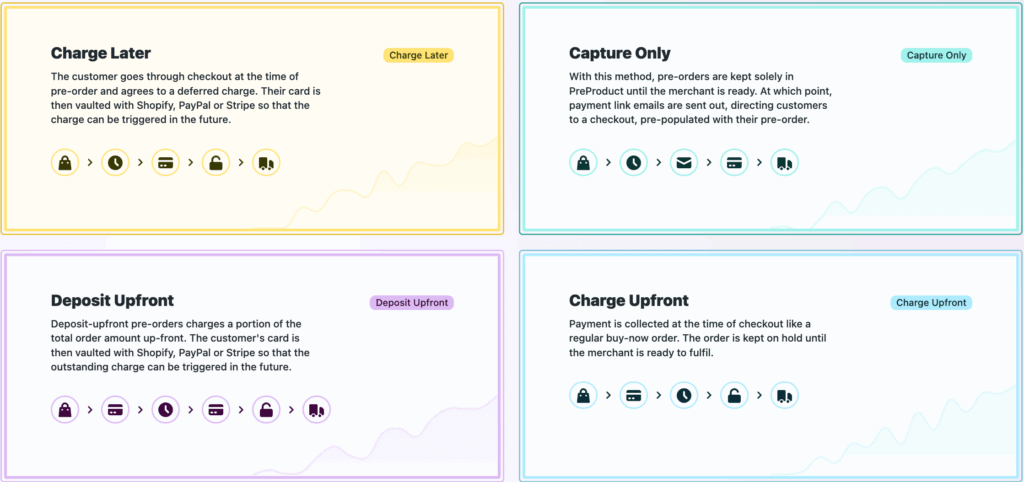
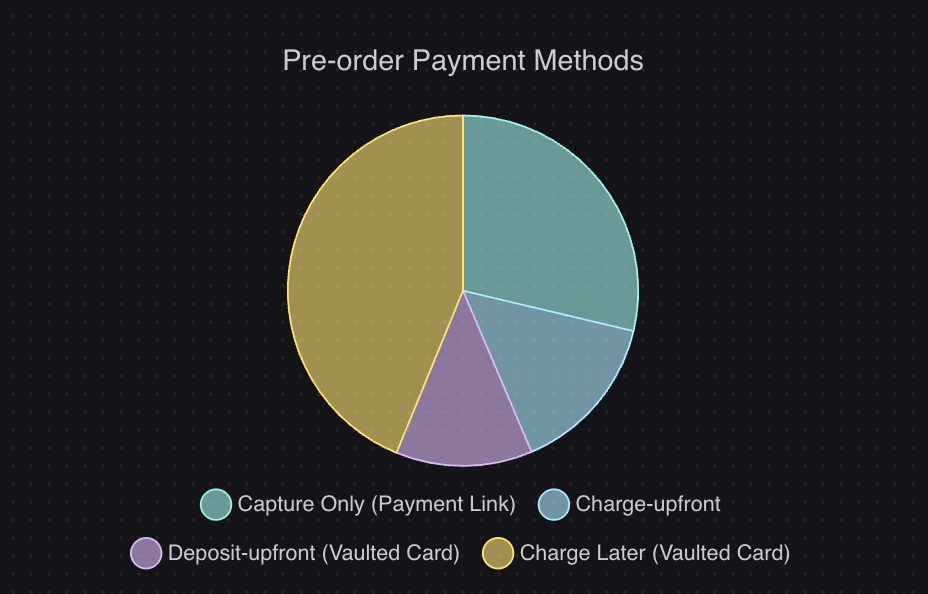
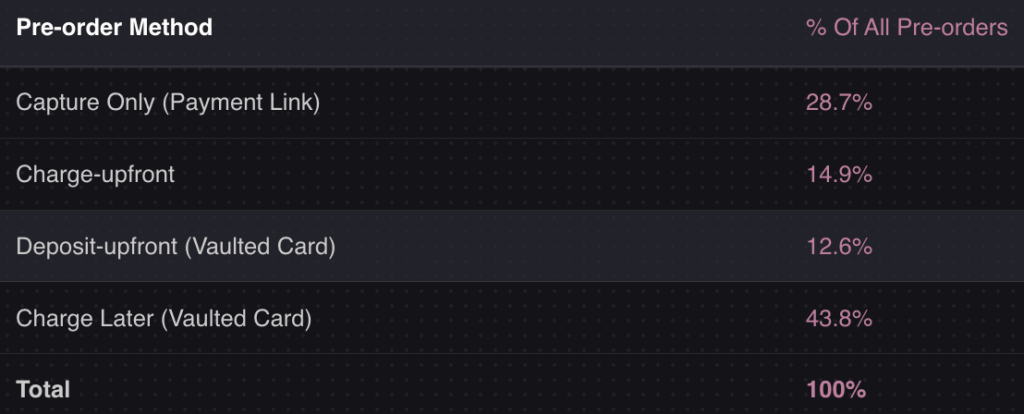
  • Different pre-order types: charge upfront pre-order, charge later pre-order, capture only pre-order, and deposit pre-order (as mentioned above).
  • Pre-order limits: if you have limited stock coming in, you may want to limit variants/products as to manage overselling.
  • Automations: some plugins will automate certain processes, saving you time. For example, the ability to schedule pre-orders or manage pre-orders automatically according to product stock levels.
  • Reporting: allowing pre-order management by viewing and updating pre-order, as well as pre-order items.
  • Pre-order listings with specific variants: allow you to list only specific variants for pre-order.
  • Isolating pre-order and buy-now items: allowing you to isolate buy-now products from pre-order products in the cart if required, and vice versa. This helps with the “double shipping” pre-order problem.
  • Customer portals: Allows customers to view their pre-order and to view shipping updates etc.
  • Comprehensive pre-order settings: Flexible shipping statements, discounts and manage which variants are on pre-order as opposed to buy-now.

Questions to ask yourself before picking a Shopify pre-order plugin

There are many pre-order plugins available in the Shopify app store, so it is important to work out which features from the above section you require. The questions we recommend asking yourself to determine this include:

  • Checking for comprehensive guides/docs for reference when setting up a pre-order campaign, along with helpful plugin support.
  • Checking for customisation and keeping on brand.
  • Is flexible pre-order charging important to you? Or will you shipping pre-orders out quickly?
  • Do you want to double-down on customer communication points, portals, emails, custom wording etc? Or are you more concerned with keeping the buyers journey as simple as possible.
  • What are your requirements in terms of business needs and size, if you have a small business you may not need an plugin that allows you to list hundreds/thousands of products with deep ERP integrations, but communication and flexibility may be important to you. If you have a business with many SKUs/product you may need a pre-order plugin that allows you list thousands of products, with automation functionality.

This article will analyse the current best Shopify pre-order Shopify plugins available on the app store, and recommend the best pre-order plugins based on 3 categories; Free, Beginner Friendly and Premium/comprehensive.

Top pre-order plugins

Premium/comprehensive pre-order plugins

PreProduct next‑gen pre‑order


Obviously as this is our plugin, we are biased, but we do believe it is the best pre-order plugin available in the Shopify app store.

PreProduct lets brands capture pre-orders for upcoming product launches at any point in the new product cycle, along with listing out-of-stock products for pre-order, so you don’t miss out on sales.

There are many amazing functions and features available in PreProduct, with a few of them listed below.

PROS:

  • Communicate via custom front-end wording, customer portals and an email campaign.
  • Full customisation available for pre-order button, wording/messaging, email campaign.
  • Charge when ready; pay-later, pay-now & deposit-based (partial payment option) pre-orders supported
  • Capture only pre-orders allow you to gauge customer interest
  • Offer pre-order discounts
  • Deferred charges let customer’s approve a future payment in advance
  • Fulfilment holds stop premature fulfilment.
  • Accept mixed-carts or opt in to isolating pre-orders in their own carts/orders.

Notify! Back in Stock|PreOrder


Pre order with partial payment for presale products. Send auto restock alerts to waiting lists.

PROS:

  • Customization options, such as personalized email templates and product variant selection for back in stock notifications
  • Get reports about lost sales and revenue recovered with reminders to convert.

DC Pre‑orders | Preorder NOW


DC Preorders simplifies pre-orders, backorders, and B2B pre-sales.

PROS:

  • Manage inventory levels easily & handle complex ordering scenarios
  • Offer flexible preorder purchase options – pay later, deposits & partial payment

Beginner friendly pre-order plugins

EZ PreOrder: Presale Manager


Start accepting pre orders on any products regardless of inventory levels, all with one click.

Unlimited pre-orders for $5 per month, for bulk listing functionality it is $10 per month.

PROS:

  • 3 pre-order rules based on inventory.
  • Easy to view all of your pre-orders, sort by fulfilment status and see order total.

Preorder Wolf | Pre order now


Preorder Wolf lets you accept orders for products you don’t have at hand right away. While setting the correct expectations with your customers regarding when will they get their order. You can enable Preorders for specific products/variants, Collections or All Products.

PROS:

  • No Coding required, 24/7 quick and professional support.
  • Effective pre-order functionality, easy setup, and customization options.

Pre-order NOW WOD


Ideal for print-on-demand stores, this tool lets you gauge interest in new designs without inventory risk, manage demand surges with ease, and offer exclusive discounts for preorders.

PROS:

  • Easy to use, with seamless integration and customization options.
  • Replace out-of-stock products with pre-order buttons, enhancing inventory management and pre-order conversion rates.

Free pre-order plugins

At the time of writing, we’re testing a commission-only plan for PreProduct where you don’t pay anything unless you successfully receive paid pre-orders.

Timesact Pre order Notify Me Pre‑Order 


Timesact helps you easily toggle between between in-stock and pre-order offerings for your customers.

The plugin offers the FIRST 10 presale orders for free.

PROS:

  • 24/7 support to help you get set-up quickly
  • Save time by turning pre-orders & restocks on/off based on inventory levels
  • Build hype with countdown timers on coming soon, drops, pre-sales & restocks

PreOrder Globo | Back in Stock


Merchants value this plugin for its reliable pre-order and out-of-stock notification features, along with customization options and pricing flexibility.

First 10 pre-sales FREE, so allows you test out using pre-orders and see if it is beneficial for your business.

PROS:

  • The support team is recognized for their efficiency and responsiveness.
  • Easy to configure pre-orders based on inventory, date time start/end preorder.

Appikon – Pre-order


Automatically create waitlists or pre order lists for sold out, out of stock, and coming soon products.

It’s ideal for new businesses, offering a free plan for the first product.

PROS:

  • The plugin swaps Add-to-Cart buttons with Pre Order buttons so very simple to set-up with a very user-friendly interface.
  • Create preorders & waitlists to sell more “coming soon” & “out of stock” items.

Summary

In this article we have discussed what a pre-order is and the many features that pre-order plugins will offer.

We then looked at the questions you need to answer regarding the needs of your business, your business size, your specific use case situation, in order to determine which Shopify plugin will best meet your needs.

After this, we explored some of the currently available options on the Shopify app store, breaking them down by three categories: Premium/comprehensive, Beginner friendly and Free. We recommended our top three plugins for each of these categories.

Hopefully this article has been helpful for deciding which pre-order plugin to move forwards with. As a general rule, experimenting by putting a test product on pre-order first before rolling out anything to customers will ensure you’re comfortable with your chosen solution before going live and can iron out any issues.

If you have any outstanding questions/concerns, feel free to leave a comment below or email me personally: eliza(at)preproduct.io

Pre-sell With PreProduct

7 day free trial with all plans
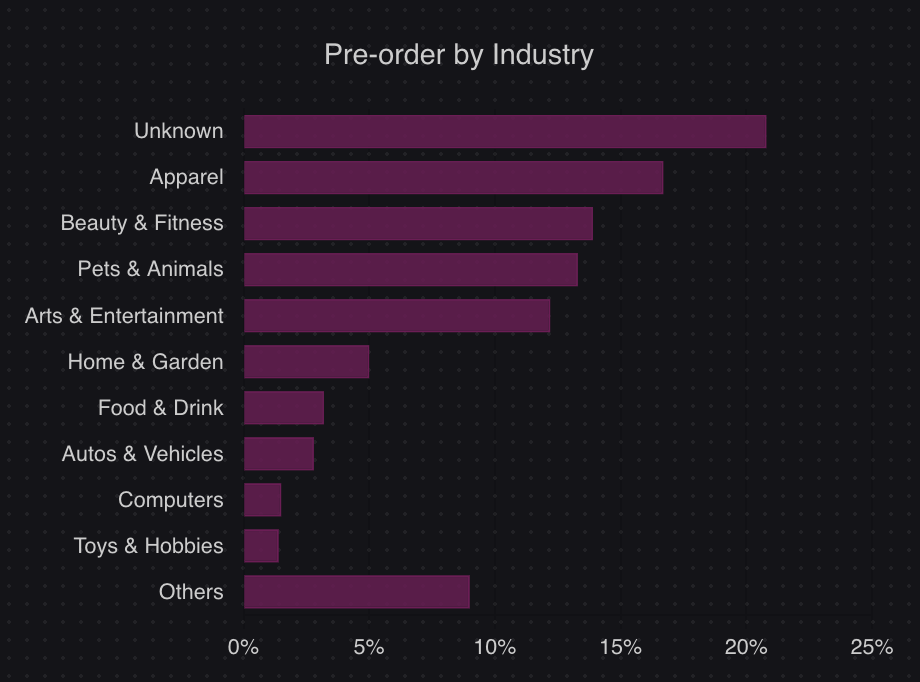
Pre-orders for Sustainability: Mastering Made-to-Order Sales Through Shopify

Introduction

Before we get into pre-orders for sustainability, some quick stats: Did you know that the fashion industry is responsible for approximately 10% of the world’s carbon emissions? That’s a significant chunk, considering it includes everything from making clothes to shipping them and eventually getting rid of them. The quick and constant turnover of trendy items in the fast fashion world is a big part of the problem, leading to more waste and environmental harm. This is effecting buyer behaviour; According to a survey from McKinsey & Co., 66% of all respondents and 75% of millennial respondents say that they consider sustainability when they make a purchase.

The concept of sustainability in fashion and online retail revolves around adopting practices that prioritize environmental, social, and ethical considerations throughout the entire supply chain and product life cycle.

I am Eliza, a co-founder at PreProduct, which is a pre-order app for ecommerce brands where I work on many fashion and made-to-order pre-order campaigns.


Made-to-order production provides a more responsive and sustainable approach to fashion manufacturing, addressing issues related to overstocking, heavy discounting, and the disposal of excess stock into landfills. It aligns production with actual demand, reduces waste, and promotes a more environmentally and economically viable business model.

Pre-orders serve as a mechanism in e-commerce to effectively implement a made-to-order model. Pre-orders allow for demand forecasting, customization options, cash flow management, and production efficiency, as they allow you to take order interest upfront reducing the risk of over or under supply, along with reducing wastage.

Shopify is one of the leading e-commerce platforms that enables individuals and businesses to create and manage online stores. I will be focusing on it for the article, as it’s the go-to solution for online fashion brands today.

The Rise of Sustainable Fashion

Consumers

Sustainable fashion is about creating, making, and wearing clothes in a way that thinks about how it impacts the planet, people, and communities at every step of the process. The goal of sustainable fashion is to minimize the negative effects associated with the fashion industry, which traditionally has been resource-intensive, environmentally damaging, and sometimes associated with poor labor practices.

A survey of 10,281 global consumers showed that 78% of consumers feel that sustainability is important and that 55% of consumers are willing to pay more for eco-friendly brands

Consumer trends towards sustainability and ethical consumption have become increasingly prominent, reflecting a growing awareness and concern about the environmental and social impact of products. This shift in consumer behavior is noticeable at various levels, including individual purchasing decisions, industry practices, and global business strategies.

Consumers are more informed about environmental and social issues related to the products they buy. This awareness is being driven by social media, online platforms, and awareness campaigns by environmental and ethical organizations.


Industry

There is also a rising demand for transparency in supply chains. Consumers want to know where and how products are made, whether fair labor practices are followed, and the environmental impact of the production process. This has led to an increase in companies providing detailed information about their sourcing and manufacturing practices.

Whilst this has been going for quite a while already, it shows signs of growing to even more front-of-mind. This rundown on Gartner’s top trends for 2023 describes sustainability as one of the technologies that will drive disruption and opportunity over the next five to 10 years.

The popularity of brands with a strong commitment to sustainability and ethical practices has grown. Consumers are actively seeking out and supporting companies that prioritize these values, leading to the rise of eco-friendly and socially responsible brands.


Some examples of exciting sustainable focussed fashion brands include; Alohas (the Spanish footwear brand that works to an on-demand business model meaning they never over-produce and only make what is actually needed, Aligne (a womenswear brand that focused on using conscious materials and using ethical factories) & Riley Studio (Gender-neutral clothing made from waste materials and natural fibres. On a mission to change mindsets and make conscious consumerism the norm).

https://www.alohas.io/products/manhattan-black-sandal?variant=37680289546433

Pre orders for sustainability

Pre-orders work by allowing customers to reserve and purchase or commit to purchase a product before it is officially available.

Stages of pre-orders

  1. Customer clicks a pre-order button
  2. Customer chooses variant/quantity and is redirected to cart/checkout where they are charged or accept a future charge (depending on the pre-order type)
  3. Customer receives optional confirmation email.
  4. Time…
  5. If …
    • Charging upfront, brand releases fulfilment. Customer receives an optional shipping email, and brand ships the pre-order item.
    • Charging later, brand triggers deferred charge. Customer receives optional upcoming charge email, after a delay the customer’s card is charged.
  6. Campaign cycle
    • If you’re a made-to-order brand, you might operate a perpetual pre-order campaign. Which is to say; constantly taking new pre-orders and fulfilling existing ones.
    • For a more standard model fashion brand that plans to pre-sell ahead of time and have a limited quantity or order might be more of a one-off campaign. i.e. taking pre-orders for a set amount of time before stock arrives, then fulfilling all pre-orders together.
Whether you’re an independent merchant, boutique or larger fashion brand, made-to-order can dramatically reduce your excess stock. Meaning zero (or close to it) stock has to go to landfill.


Benefits of pre-orders for both consumers and businesses

Benefits to merchants

  • This strategy for sustainability doesn’t impact how your products are designed, made or sourced; meaning it can be one of the easier ways to increase your brands sustainability.
  • Leading on from the above point, sustainability via pre-orders is a lot cheaper than a product audit and overhaul. It can also be better for cashflow, due to receiving purchases upfront or when you’re ready to ship.
  • A low risk tactic for reaching your sustainability targets. We recommend experimenting with a pre-order campaign for an upcoming product first. Once you’ve iterated on your pre-order setup and standard-operating-procedure, you can then roll pre-orders out on a larger scale.

Benefits to consumers

  • Customers can buy from one of their favourite brands (you!), whilst feeling good about their purchasing decision.
  • By purchasing from a business who is using pre-orders to be more sustainable there will be a reduction on the environmental impact associated with unnecessary production, as well as a lower carbon footprint.
  • Modern pre-order technology like PreProduct allows for more flexible types of pre-orders, for example charge-later pre-orders, where the customers card is ‘vaulted’, meaning they’re only charged when you’re ready to ship.
  • Being able to participate on a less abrupt buying journey. Emailing pre-order customers to keep them in the loop and communicate how their purchase is coming along is a great way to build brand affinity. You can see this dynamic with Kickstarter campaigns; backers love following along with the journey.


Integrating & setting up Pre-orders with Shopify

Step-by-step guide on setting up a pre-orders on Shopify

  1. To get started and set up pre-orders on Shopify, visit the Shopify App Store and search for “pre-order”, then select the app you wish to install (surprisingly, we recommend PreProduct).
  2. Once you have located the app, click on it to access the app listing page, and then select the “Add app” option.
  3. To grant the app access to your Shopify admin account, click “Install app” and authorize its use.
  4. Integrating the App with Your Storefront: We have an in-depth guide on the installing a pre-order app here and would absolutely recommend reaching out to customer support if you’re at all uncomfortable with HTML/Liquid coding.
  5. If you have a Shopify “store 1.0” theme, then you’ll need to add a snippet to your online store’s product page theme file. For themes from 2022 onwards, the introduction of Shopify 2.0 themes means that app blocks can now seamlessly integrate into the Shopify admin’s drag-and-drop theme customizer.

Listing Pre-orders on Shopify

Once you’ve completed the above steps to integrate the app with your Shopify storefront, you can now start listing products for pre-orders. Begin by listing a product in your selected pre-order app. Most if not all pre-order apps sit on top of your existing Shopify product listings. Once listed in the app, the pre-order product page’s cart button text should be replaced with a pre-order version, accompanied by any other front-end additional information, i.e. special pre-order messaging.

You will need to decide which type of pre-order to use (as explained below), along with the shipping time frame and whether to offer any discount. The general pre-order types are:

  • Charge upfront pre-order – 100% charged upfront (Most apps will offer this).
  • Charge Later pre-orders – 100% charged later when you trigger the charge.
  • Deposit-based pre-orders – A percentage paid upfront, with the outstanding charged later.
  • Capture-only pre-orders – A payment link is sent once you’re ready to send customers through your payment gateway.

Besides the terms of payment for your pre-order listing, there are many other other useful features available that are worth considering before you choose an app to go forwards with.

  • Listing specific variants
  • Setting max pre-order limits for variants
  • Early bird discounts that are exclusive to pre-orders
  • Custom text in and around the pre-order button
  • Email campaigns to keep customers in the loop with their pre-order
  • Isolating pre-order items from buy-nows in orders
  • Fulfilment holds so items aren’t prematurely pushed to your shipping/ERP platform
  • Automatic listing of out of stock products for pre-order
  • Automatic charging of pre-orders as stock comes in
  • And many more!

Marketing Your Made-to-Order Products


When marketing made-to-order products, ensure you highlight the unique aspects of customization, personalization, and the tailored experience. Below are some of the strategies to consider including;

  • Emphasize Customization: Highlight the ability for customers to customize their products according to their preferences. Showcase the range of options available, whether it’s color choices, materials, sizes, or features.
  • Tell a Unique Story: Craft a compelling narrative around the made-to-order process. Explain the craftsmanship, attention to detail, and the personalized journey each customer undergoes when ordering a product.
  • Educate on the Process: Provide transparent information about how the made-to-order process works. Explain the steps involved, the craftsmanship behind it, and the benefits of choosing a personalized item over mass-produced alternatives.
  • Limited Edition Releases: Create a sense of exclusivity by framing made-to-order products as limited edition releases. This can evoke a feeling of uniqueness and urgency, encouraging customers to place orders promptly.
  • Social Media Engagement: Leverage social media platforms to showcase the customization process, share behind-the-scenes glimpses of craftsmanship, and engage with your audience through polls, Q&A sessions, or live videos.
  • Adopt a more boutique look and feel: Reflecting an environmentally conscious, “human” business through storytelling and additions like optional staff tips at checkout can all be ways to create a more compelling offering.
  • Utilize Email Marketing: Build an email marketing campaign to nurture leads and inform customers about the benefits of made-to-order products. Include visuals, success stories, and exclusive offers to encourage conversions.

Pre-order and made-to-order product launches can unlock a whole new set of strategies for marketing:

  • Launching your product more than once. Once when you open pre-sales, then once when it’s in stock.
  • Having multiple sales pushes for your made-to-order products as sales/stock goes up and down. There are many artists that are really effective with this approach, for example Kimmy Hogan an Australian print and ceramic designer will often post multiple times a week as new editions become available or are pre-released.

Case Study: Frahm Jackets

  • Frahm is a UK men’s jacket company, that focuses on high quality and timeless style.
  • Frahm uses a pre-order process, to ensure they are not left with excess stock, as over buying impacts the quality they can product. Each jacket design is only made once a year, every year, so if you place a pre-order with them before they have placed their order with the factory then you are guaranteed your choice of size and colour.

https://frahmjacket.com/collections/jackets/products/ripstop-puffer-jacket-2024

Overcoming Challenges in Pre-order and Made-to-Order Models

Potential challenges you may experiences when using pre-order and made-to-order models include;

  • Production timing issues – if you experience any production delays or inventory management issues, ensure you keep customers up to date. This can be done by email, as well utilising the customer portal both should be available in the pre-order app you choose to use. Clear communication about expected delivery dates is crucial to managing customer expectations, as is setting realistic delivery timelines to avoid over-promising and under-delivering.


  • Quality control – is crucial as products are often produced based on individual customer specifications. Consistency is key. Similar to product timing issues, ensure customers are kept informed of any changes.


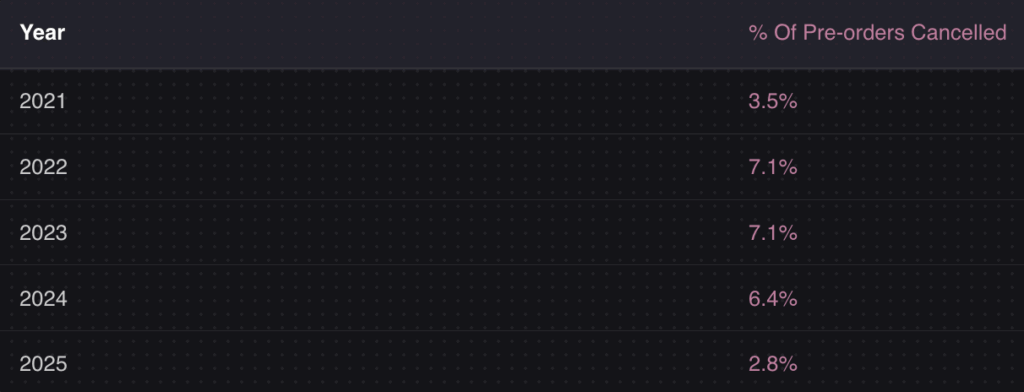
  • Cancellation and returns – customers might cancel orders, leading to revenue fluctuations and potential inventory management challenges. Ensure you have a refund/cancellation policy that you are happy with and works for your business.
  • Cash Flow Management – the production process often requires upfront costs, therefore managing cash flow becomes crucial as expenses may need to be covered before revenue is generated. Therefore is very important to choose the type of pre-order that will work for your business.

If it is your first time using pre-orders, and you feel apprehensive about the process, and have any doubts on production timings/fulfilment, we would recommend starting with charge-later pre-orders to begin with so that you’re not charging any money upfront; generally customers will be much more tolerant of delays when they haven’t paid anything yet.

Conclusion

This article has highlighted that there are many benefits of using pre-orders for sustainability, including;

Reduced Overproduction:

  • Pre-orders allow you to gauge customer demand accurately. By producing items based on confirmed orders, the risk of overproduction is significantly reduced. This helps in minimizing excess inventory, which can be wasteful and environmentally harmful.

Resource Efficiency:

  • With pre-orders, resources such as raw materials and energy are used more efficiently. Manufacturers can plan production based on actual demand, optimizing the use of resources and reducing the environmental impact associated with unnecessary production, this will also contribute to a lower carbon footprint.

Extended Product Lifecycles:

  • Pre-orders can contribute to the creation of products that are more timeless and have longer lifecycles. Instead of following fast fashion or other trends that lead to rapid product turnover, pre-orders can encourage the production of durable and lasting goods, reducing overall waste.

Financial Stability for Sustainable Investments:

  • The cash flow generated through pre-orders can provide financial stability for your business, allowing you to make long-term investments in sustainable practices.

We strongly encourage businesses to look into and adopting these practices for a more sustainable future in retail. If you find pre-orders intimidating, we recommend merchants start with a single product as an experiment and use a ‘charge-later’ strategy so that you’re not charging customers until you’re comfortable.

Pre-orders for Sustainability FAQ

Pre-orders help in reducing overproduction, which is a major issue in the fashion industry. By producing only what is pre-ordered, brands can minimize waste and reduce their environmental footprint. This approach ensures resources are used more efficiently, leading to a more sustainable production process.

How do pre-orders actually contribute to sustainability in fashion?

Absolutely! Shopify’s platform is user-friendly and scalable, making it ideal for brands of all sizes. Pre-orders can help small or emerging brands manage inventory more effectively, reduce upfront costs, and build a customer base interested in sustainable fashion.

Can implementing pre-orders on Shopify be beneficial for small or emerging fashion brands?

Common challenges include managing production timelines, setting realistic delivery dates, and maintaining customer communication. To overcome these, plan your production schedule carefully, set clear and transparent communication channels with your customers, and use Shopify’s tools to keep track of orders and inventory efficiently.

What are the key challenges I might face when setting up pre-orders on Shopify, and how can I overcome them?

Leveraging social media, creating email marketing campaigns, and engaging in storytelling about your brand’s commitment to sustainability are effective strategies. Also, consider offering exclusive perks for pre-order customers, like early access to new products or special discounts.

Are there any specific marketing strategies that work best for promoting pre-order campaigns on Shopify?

Transparency is key. Keep your customers informed about the status of their orders. If delays occur, communicate them promptly and offer options like order modifications or cancellations if needed. Building trust through clear communication can turn a potential negative experience into a positive one.

How can I ensure a positive customer experience with pre-orders, especially when there are delays?

Pre-sell With PreProduct

7 day free trial with all plans