Demand Planning & Forecasting for E-commerce: A modern approach for 2026
Accross Shopify and Amazon, stockouts have been shown to affect around 50% of products each year, while global estimates suggest over $1 trillion is lost through missed sales. That same set set of data found overstocking can increase storage and holding costs by 20-30%, leading to excess capital being tied up in unsold inventory. Demand forecasting for e-commerce sits at the intersection of these costly extremes, helping ecommerce brands answer a critical question: how much inventory should you hold, and when?
For established products with sales history, traditional forecasting methods work well. But what about new product launches, where no historical data exists? This is where most ecommerce brands struggle, often resorting to guesswork that leads to overproduction or missed opportunities.
This guide covers both traditional demand forecasting methods and an underutilized strategy: using pre-orders as forward-looking demand signals. You’ll learn how to predict customer demand accurately, avoid costly inventory mistakes, and validate new products before committing to production.
What Is Demand Forecasting in E-commerce?

Demand forecasting is the process of estimating future product demand using historical sales data combined with real-time market signals. It helps ecommerce brands determine how much inventory to order, when to restock, and which products will sell.
Demand forecasting differs from demand planning, which is the broader process that includes procurement, production scheduling, and supply chain coordination. Forecasting provides the demand estimates; planning turns those estimates into action.
Why it matters: accurate demand forecasting directly impacts your cash flow, customer satisfaction, and operational efficiency. 98% of companies now integrate AI into their supply chains (Q1 2025) because getting demand predictions right has become a competitive advantage.
The High Cost of Poor Demand Forecasting
When demand forecasting misses the mark, the financial impact compounds quickly across your entire operation.
Overstocking costs: Inventory distortion cost retailers a significant portion of total potential revenue. Excess inventory increases storage costs by 20-30%, and dead stock eats up to 20% of your inventory’s value annually just sitting in warehouses. For perspective, if your store holds $100,000 in inventory, you’re spending $20,000 to $30,000 yearly just to keep those products on hand.
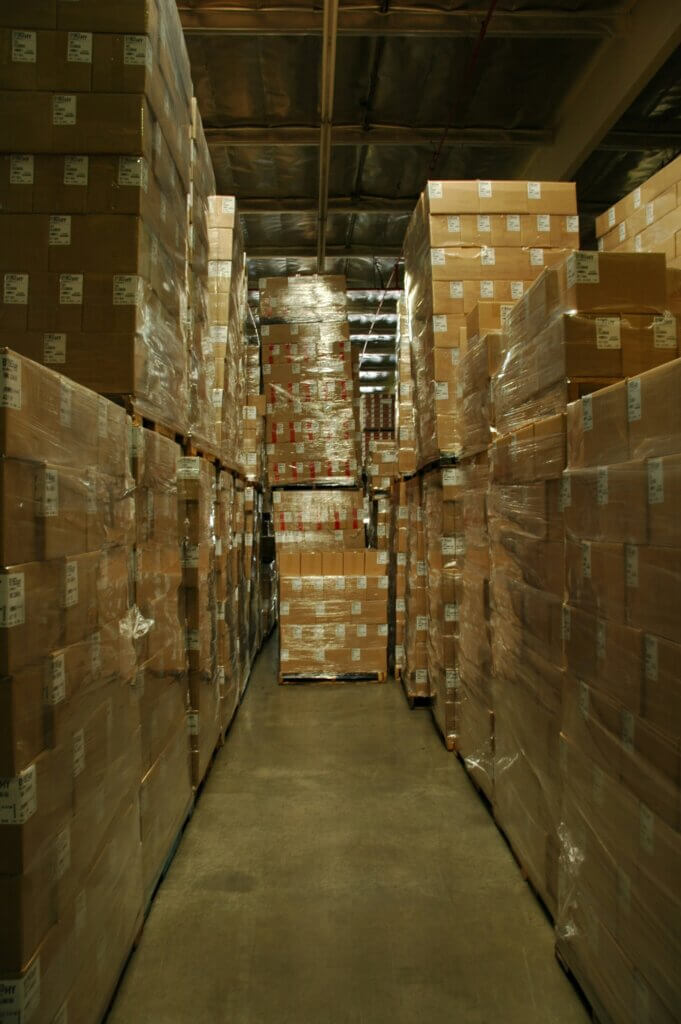
Stockout costs: Missing inventory hits even harder. Stockouts cost retailers $984 billion annually in lost sales opportunities. 69% of online shoppers will abandon their purchase entirely and shop with competitors when items are unavailable. That’s not just a lost sale, it’s a lost customer relationship.
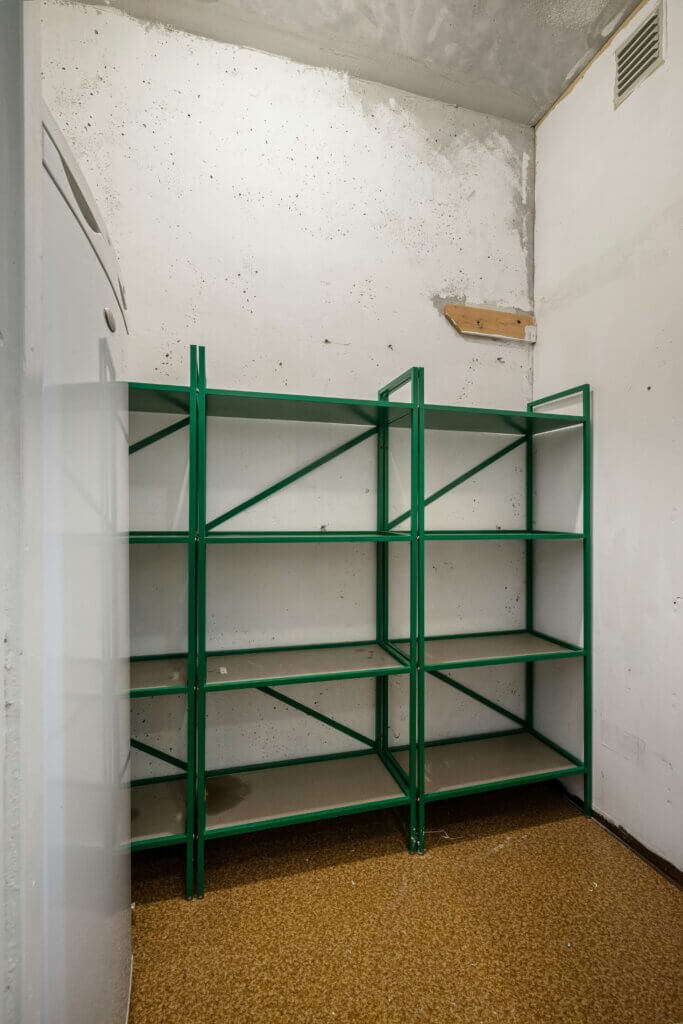
Accuracy gaps: Traditional forecasting methods often achieve only 60-70% accuracy, leading to consistent over or underordering. Modern AI-powered tools now achieve 89-92% accuracy with six months of historical data, showing the gap between old and new approaches.
Cash flow impact: 42% of small businesses struggle with overstocking, which directly impacts their ability to invest in growth, marketing, or new product development. Poor inventory management causes businesses to lose up to 11% of annual revenue through stockouts and overstocking combined.
Traditional Demand Forecasting Methods
Most ecommerce brands rely on three main forecasting approaches, each suited for different scenarios and data availability.
Quantitative Forecasting
Quantitative forecasting uses mathematical models applied to historical sales data. Common techniques include time-series analysis (moving averages, exponential smoothing, ARIMA models), trend analysis, and seasonal decomposition.
Best for: Products with at least six months of sales history, stable demand patterns, and minimal external disruption.
Limitation: Completely ineffective for new products with no sales history. You can’t forecast what hasn’t been sold yet.
Example: A Shopify brand selling yoga mats can analyze the past 18 months of sales to predict next quarter’s demand, accounting for seasonal spikes around New Year’s resolutions.
Qualitative Forecasting
Qualitative methods rely on expert opinions, market research, customer surveys, and competitive analysis rather than hard data. This includes techniques like the Delphi method (structured expert consensus), market testing in limited regions, and sales team input.
Best for: New product launches, significant market shifts, entering new customer segments, or when historical data is sparse or unreliable.
Limitation: Subjective and potentially biased. Expert opinions can be wrong, and market research doesn’t always translate to actual buying behavior.
Example: A fashion brand planning a limited-edition drop might survey their email list and social media followers to gauge interest before production.
AI & Machine Learning
AI-powered forecasting integrates multiple data sources in real-time: internal sales data, weather patterns, social media sentiment, competitor pricing, economic indicators, and search trends. Machine learning models continuously improve their predictions as new data arrives.
Modern AI systems can generate SKU-level daily forecasts and adapt to changing conditions without manual intervention. Target’s Inventory Ledger makes “billions of predictions each week” using AI to optimize inventory across thousands of locations.
Accuracy: Tools like Cogsy achieve 92% forecast accuracy for businesses with at least six months of data, while Fabrikator users see 20-40% improvement in forecasting accuracy within three months.
Best for: Established products with consistent data flow, brands with complex SKU portfolios, and operations where marginal accuracy improvements deliver significant value.
Limitation: Requires clean, consistent data; less effective for truly novel products; and can be expensive to implement for smaller operations.
Pre-orders: The Underutilized Demand Validation Tool
Here’s the new product problem: traditional forecasting methods all depend on historical data. When you’re launching something completely new, you have no history. Qualitative research and surveys provide directional guidance, but they don’t answer the critical question: will customers actually buy this?
Pre-orders solve this by gathering real demand signals before you commit to production or large inventory purchases. Instead of guessing based on market research, you measure actual purchase intent with customers putting money down.
Real Data Validation
PreProduct has processed $85.3 million across more than one million pre-orders between 2021 and Q1 2025. This dataset reveals patterns that help ecommerce brands forecast more accurately.
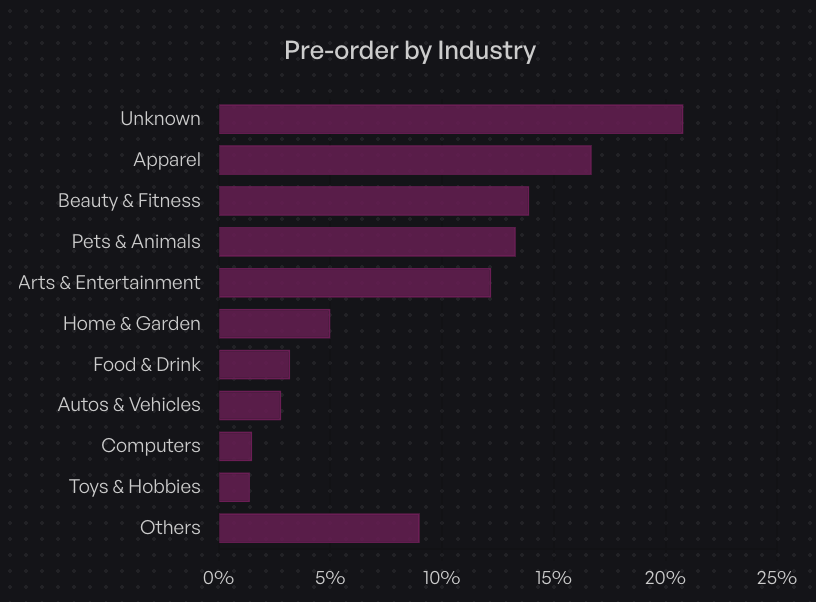
Pre-orders work particularly well for ecommerce categories with longer lead times. Top pre-order categories include Apparel (16.7%), Beauty & Fitness (13.9%), and Home & Garden (11.5%). These are products where customers are willing to wait for something they want.
Pre-order Demand Signals You Can Trust
Not all pre-order signals carry equal weight. Payment timing reveals how committed customers really are.
Payment timing reveals commitment level: 43.8% of pre-order listings use charge-later models, where customers authorize payment but aren’t charged until fulfillment. Another 25% charge upfront, collecting full payment immediately. These different payment models signal different levels of customer commitment.
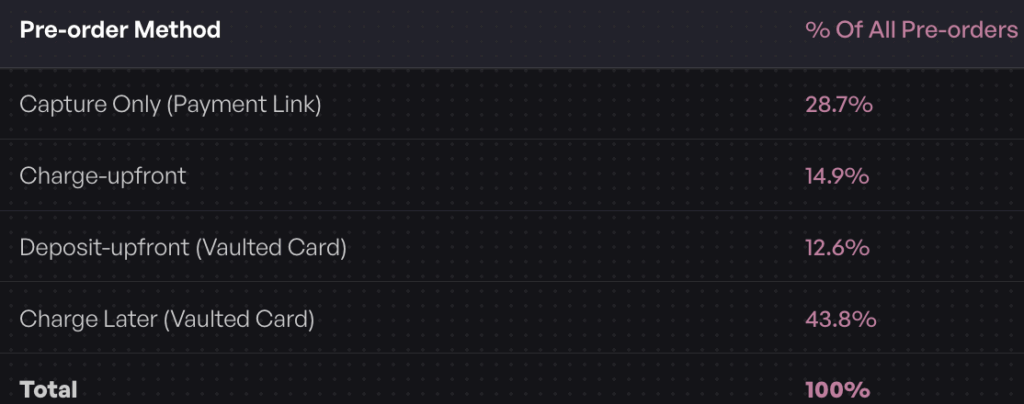
Charge-upfront pre-orders indicate genuine demand and high commitment. When customers pay immediately for a product that won’t ship for months, they’re confident in their purchase. Use these signals as strong validation.
Charge-later pre-orders suggest exploratory interest with lower commitment. Customers are interested enough to place an order but not ready to part with money yet. Factor this into your forecasts by weighting charge-later orders at a lower conversion rate than upfront charges.
Cancellation rates as adjustment factors: Pre-orders average a 5.4% cancellation rate, with the rate dropping to 2.8% in 2025. Build this buffer into your production planning. If you need 1,000 units and your cancellation rate runs at 5%, you should gather 1,053 pre-orders to account for cancellations.
Lower cancellation rates often indicate improving targeting, better customer communication, or stronger product-market fit. Monitor your cancellation trends to refine your forecasting accuracy over time.
Price sensitivity insights: Products priced $25-50 generated 42.7% of individual pre-orders despite representing only 18.2% of listings. This price range represents a sweet spot for demand validation, low enough risk for impulse purchases but high enough to signal real interest.
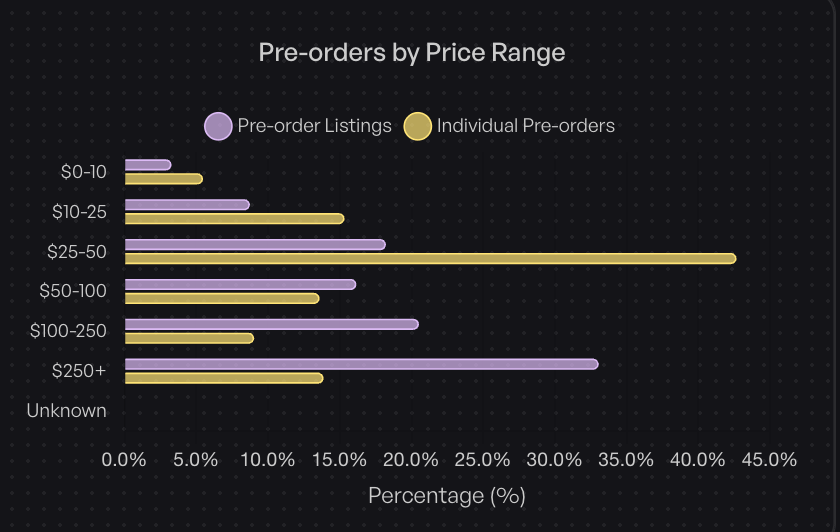
Use pre-orders to test price elasticity before full production. Launch at your target price and monitor conversion rates. If demand is weak, test a lower price or stronger positioning before committing to large inventory runs.
Lead Times & Supply Chain Planning
Pre-order shipping windows provide valuable supply chain visibility. 28.1% of pre-orders ship within 121-150 days, while 20.6% ship within 30 days. These extended timelines aren’t bugs, they’re features.
Longer pre-order windows give you time to align production schedules with confirmed demand. A four-month pre-order window lets you order materials, schedule production, and arrange logistics without rushing or guessing quantities.
Shorter pre-order windows (under 30 days) work well for restocks of proven products where you need to gauge immediate demand before the next production run arrives.
When to Use Pre-orders for Forecasting
Pre-orders provide the most value in specific scenarios where traditional forecasting falls short:
New product launches: When you have zero sales history, pre-orders are your only source of real demand data. Market research suggests interest; pre-orders prove it.
Limited editions or seasonal drops: For products with intentional scarcity or time-bound availability, pre-orders help you set production quantities without overproducing.
High-value items: Expensive products carry more inventory risk. A pre-order approach reduces that risk by confirming demand before you tie up capital in unsold inventory.
Made-to-order or custom products: When production only starts after an order arrives, pre-orders are the business model, not just a forecasting tool.
Testing new markets or customer segments: Expanding into new geographies or demographics? Pre-orders validate demand in that segment before you invest in local inventory or marketing.
Building Your E-commerce Demand Forecasting Process
Effective demand forecasting requires a systematic approach that combines data gathering, method selection, and continuous refinement.
Step 1: Gather Your Data Sources
Start by consolidating all available demand signals, both historical and forward-looking.
Internal data: Pull from your POS system, ERP, CRM, and website analytics. You need transaction history, inventory movement, customer behavior data, and return rates. Clean this data first, duplicate and incomplete records will skew your forecasts.
External data: Layer in market trends, seasonality patterns, economic indicators, and competitive intelligence. If you sell outdoor gear, weather forecasts matter. If you sell fashion, trend reports from major markets influence demand.
Forward-looking signals: Don’t ignore what’s happening right now. Pre-order data, waitlist sign-ups, email campaign engagement, and social media buzz all indicate future demand before it shows up in sales data.
The more data sources you integrate, the more accurate your forecasts become, assuming the data is clean and relevant.
Step 2: Choose Your Forecasting Method
Match your forecasting approach to your product lifecycle and data availability.
Existing products with history: Use quantitative methods, preferably AI-powered tools that can process multiple variables simultaneously. Historical sales patterns work well here.
New products: Combine pre-orders with qualitative research. Pre-orders provide hard numbers; market research adds context about positioning and target customers.
Hybrid approach: Most brands benefit from combining multiple methods. Use AI for established catalog items, pre-orders for new launches, and qualitative input for major market shifts or strategic decisions.
Don’t lock yourself into one method. Different products and scenarios call for different forecasting techniques.
Step 3: Set Your Forecast Parameters
Define the specifics of what you’re forecasting and over what time horizon.
Forecast horizon: Choose 30, 60, 90, or 180-day forecast windows based on your lead times and business cycle. Longer lead times require longer forecast horizons.
Granularity: Decide between SKU-level forecasts (more accurate but more complex) versus category-level forecasts (simpler but less precise). Most brands benefit from SKU-level forecasting for top sellers and category-level for long-tail products.
Confidence intervals: Build in buffers for forecast uncertainty. A forecast with a confidence interval acknowledges that actual demand might fall within a range, not hit a single number.
Step 4: Implement Human-AI Collaboration
The best forecasting systems combine algorithmic predictions with human judgment.
Trust AI for steady-demand products: Let automated systems handle forecasting for products with consistent, predictable demand patterns. The algorithm will outperform human guesses here.
Apply expert judgment for new items and external disruptions: When launching new products, facing supply chain disruptions, or dealing with major market shifts, layer in human expertise. Algorithms can’t predict the unpredictable.
Override capabilities: Maintain the ability to override automated forecasts when you have information the system doesn’t. If you know a major marketing campaign is launching or a competitor is going out of business, adjust forecasts accordingly.
Step 5: Monitor & Adjust
Demand forecasting isn’t a set-it-and-forget-it exercise. Continuous monitoring and refinement improve accuracy over time.
Track forecast accuracy: Measure how close your predictions came to actual demand. Use metrics like MAPE (Mean Absolute Percentage Error) to quantify accuracy.
Review regularly: Check forecasts weekly for fast-moving products and monthly for steady sellers. Adjust as you gather new information.
Refine models: As actual sales data comes in, feed it back into your forecasting models. Machine learning systems improve automatically; manual processes require intentional updates.
Key Metrics to Track
Effective demand forecasting requires monitoring specific KPIs that measure both forecast quality and inventory health.
Forecast accuracy (MAPE): Mean Absolute Percentage Error measures how far your forecasts deviate from actual demand. Aim for MAPE under 10%, though this varies by product category and lifecycle stage.
Forecast Value-Added (FVA): Does your forecast beat a naive baseline (like assuming next month equals this month)? If your sophisticated model doesn’t outperform simple baselines, simplify your approach.
Days of supply: How long will current inventory last at predicted demand rates? This metric helps you time reorders and avoid stockouts.
Stock-out rate: Target under 2%, though the industry average sits around 8%. Track this by SKU to identify chronic stock-out problems.
Inventory turnover: How quickly you sell through stock indicates forecasting efficiency. Higher turnover (assuming you avoid stockouts) suggests accurate demand prediction.
Pre-order conversion rate: For products using pre-orders, track the percentage of pre-order interest that converts to completed orders. This validates your demand forecasting assumptions.
Cancellation rate: Monitor pre-order cancellations (5.4% average) and factor this into future forecasts. Rising cancellation rates might indicate pricing, positioning, or communication issues.
Demand Forecasting Best Practices
Follow these principles to improve forecast accuracy and operational efficiency.
Start with quality data: Clean, consistent historical data is the foundation. Remove duplicates, fix missing values, and standardize formats before feeding data into forecasting models. Bad data leads to bad forecasts.
Segment your forecasts: Different product types require different approaches. New launches need pre-order validation; established bestsellers need time-series analysis; seasonal products need year-over-year comparisons.
Layer pre-orders into new launches: Don’t guess on new product demand. Use pre-orders to gather real purchase intent before committing to large production runs. This reduces the single biggest forecasting risk: products with no history.

Factor in seasonality: Adjust for known demand patterns tied to holidays, weather, or industry cycles. A ski shop knows winter drives demand; build those patterns into forecasts rather than treating each month as independent.
Collaborate cross-functionally: Align marketing, operations, and finance teams around demand forecasts. Marketing knows campaign timing; operations knows lead times; finance knows cash constraints. Better forecasts emerge from combined perspectives.
Use multiple data sources: Don’t rely solely on historical sales. Integrate market research, competitive intelligence, economic indicators, and forward-looking signals like pre-order data and waitlist growth.
Build in buffers: Account for cancellations, returns, and demand variability. Perfect forecasts don’t exist; buffers protect against the inevitable misses.
Review regularly: Fast-moving products need weekly reviews; steady products need monthly check-ins. Update forecasts as new information arrives rather than sticking with outdated predictions.
Choosing Demand Forecasting Tools
The right forecasting tools depend on your business size, technical capabilities, and accuracy requirements.
Considerations: Evaluate integration with your existing tech stack (Shopify, ERP, 3PL systems), forecast accuracy rates (ask for MAPE benchmarks), learning curve and team capabilities, and total cost including implementation and ongoing fees.
AI-powered options: Cogsy achieves 92% accuracy for businesses with six months of data, specializing in Shopify DTC brands. Fabrikator users see 20-40% improvement in forecast accuracy within three months, with strong ERP integration.
Enterprise solutions: NetSuite and SAP offer comprehensive demand planning within larger ERP suites, suited for complex, multi-channel operations.
Shopify-specific: Shopify’s Sidekick brings AI-powered forecasting directly into the Shopify admin, convenient for Shopify-native brands.
For new products: PreProduct enables pre-order demand validation for new product launches, helping you gather real purchase intent before committing to inventory. This complements traditional forecasting for established products by filling the new-product gap.

For most ecommerce brands, a hybrid approach works best: AI-powered tools for established catalog items and pre-order validation for new launches and major restocks.
Conclusion
Demand forecasting prevents the costly extremes of stockouts and overstocking, keeping cash flow healthy and customers satisfied. The right approach depends on your product lifecycle: traditional quantitative methods work well for existing products with sales history, while pre-orders fill the critical gap for new launches where no data exists.
Combine quantitative forecasting, qualitative insights, and forward-looking signals like pre-orders to build a comprehensive demand planning system. Start with clean data, choose tools that fit your operation, and adjust forecasts regularly as new information arrives.
Key takeaways:
- Poor forecasting costs retailers over $1 trillion annually through stockouts and overstocking combined
- AI-powered tools can now achieve 89-92% accuracy, significantly outperforming traditional methods
- Pre-orders provide real demand signals for new products, with payment timing revealing commitment levels
- Build in 5.4% cancellation buffers for pre-order forecasts
- Products priced $25-50 see the highest pre-order conversion rates
Ready to improve your demand forecasting? For established products, explore inventory management best practices. For new launches, start validating demand with pre-orders before you commit to production. Real demand data beats guesswork every time.
Pre-sell With PreProduct
7 day free trial with all plans